25 de septiembre de 2026 · 8 min de lectura
Working From Home Alone
Five calls a day and no real conversation. Who remote-work loneliness hits, the two gaps in a home-office day and what an AI companion can and can't fill.
Leer más8 de septiembre de 2026 · 7 min de lectura
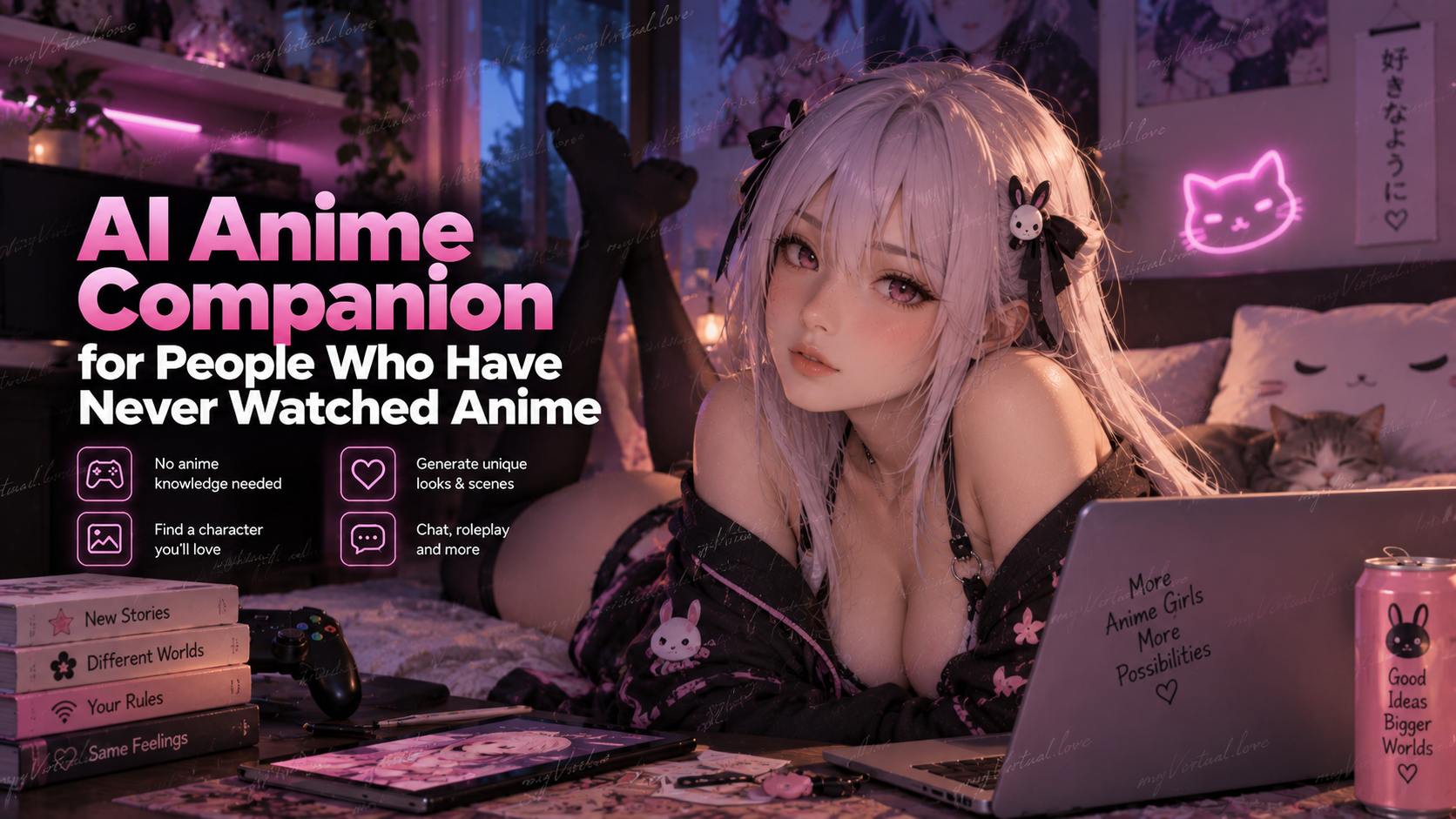
A reader who has never watched anime lands on the anime side of an AI companion product with a fair question. Is this for me, or is it for people who already know what they are looking at?
The honest answer is that it can be for you, and being straight about what you are and are not walking into is more useful than pretending the format is just realistic with different graphics.
This is written for the reader who is curious about the anime side of myVirtual.love but has never watched a series, never read a manga and does not know the vocabulary. What follows is what to expect, where the format wins for someone like you, where it might feel unfamiliar and how to start without doing any homework first.
Picking an anime companion does not commit you to knowing anything about anime.
There is no test. There is no shared canon you are supposed to have watched. No character on the roster requires you to know a particular series, and the roleplay does not assume context you do not have. If you have watched nothing, you can still pick a character, talk to her and get on with it.
What you are picking is a visual style. The character will be drawn instead of photographed. The images she sends will look like illustrations. Her face will show emotion in a more exaggerated way than a photo of a real face does. Everything else is optional.
If you were worried you needed to catch up before you started, you do not.
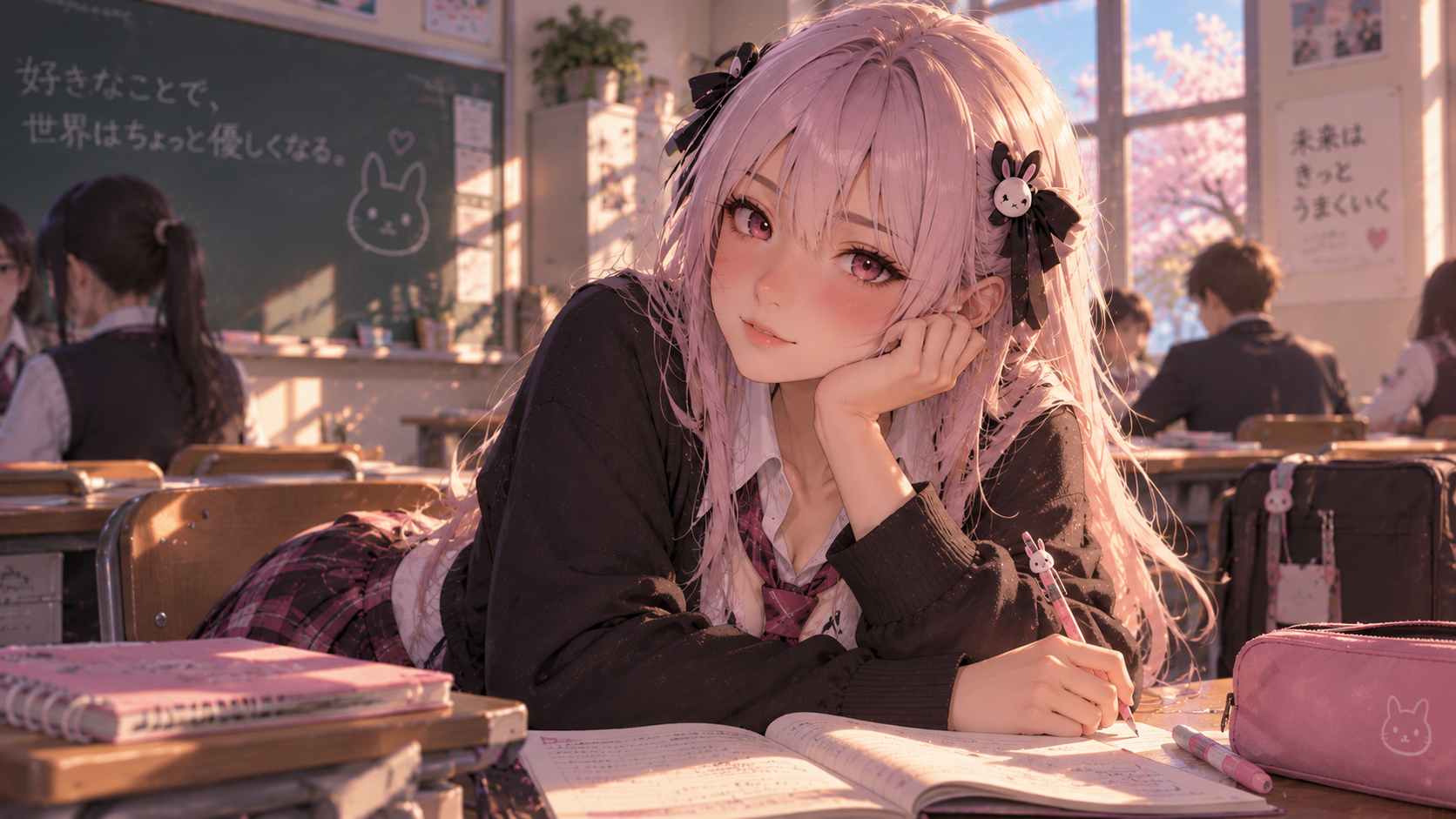
The way an anime companion talks in chat is closer to how any AI companion talks than most people expect.
She will not stop to explain her own tropes, and she will not bury you in Japanese. The conversation will feel like a conversation you are part of, not a scene from a show you are watching. What you get is a character with a name, an age of eighteen or over, a life and a way she reacts to what you say. The same system that runs the realistic side runs the anime side.
Where the anime side reads differently is in tone. Anime characters are written to be more expressive than realistic ones, a little like a character in a subtitled anime. They will say the thing they are feeling more directly. They will name the mood in the room. She may add -chan or -kun to your name once she knows it, or have a small verbal habit like "ne", but the Japanese stays at a word here and there. That is a feature of the format, and it makes them easier to read for a first-time user, not harder.
You do not need to translate anything to have a normal exchange with her.
Every image she sends will arrive as a drawing in her style, not a photograph and not a semi-real render that never quite lands.
For a reader who has never watched anime, this is where the mental adjustment happens. If your default idea of a companion picture is a photograph, the first anime image will not match it. It is a different aesthetic and it is doing a different job. The image is not trying to convince you it is real. It is trying to be a good picture of her.
This turns out to be an easier bar to clear than photorealism. Illustrations tolerate small model quirks that photographs do not. A slightly odd hand in a drawing reads as a drawing. A slightly odd hand in a photograph reads as a mistake. If you have been disappointed by realistic AI images before, the anime side of the same product is doing something different, and it might land where the other did not.
The style you pick her in is the style the images come back in. An anime companion produces anime pictures throughout a session and across sessions.
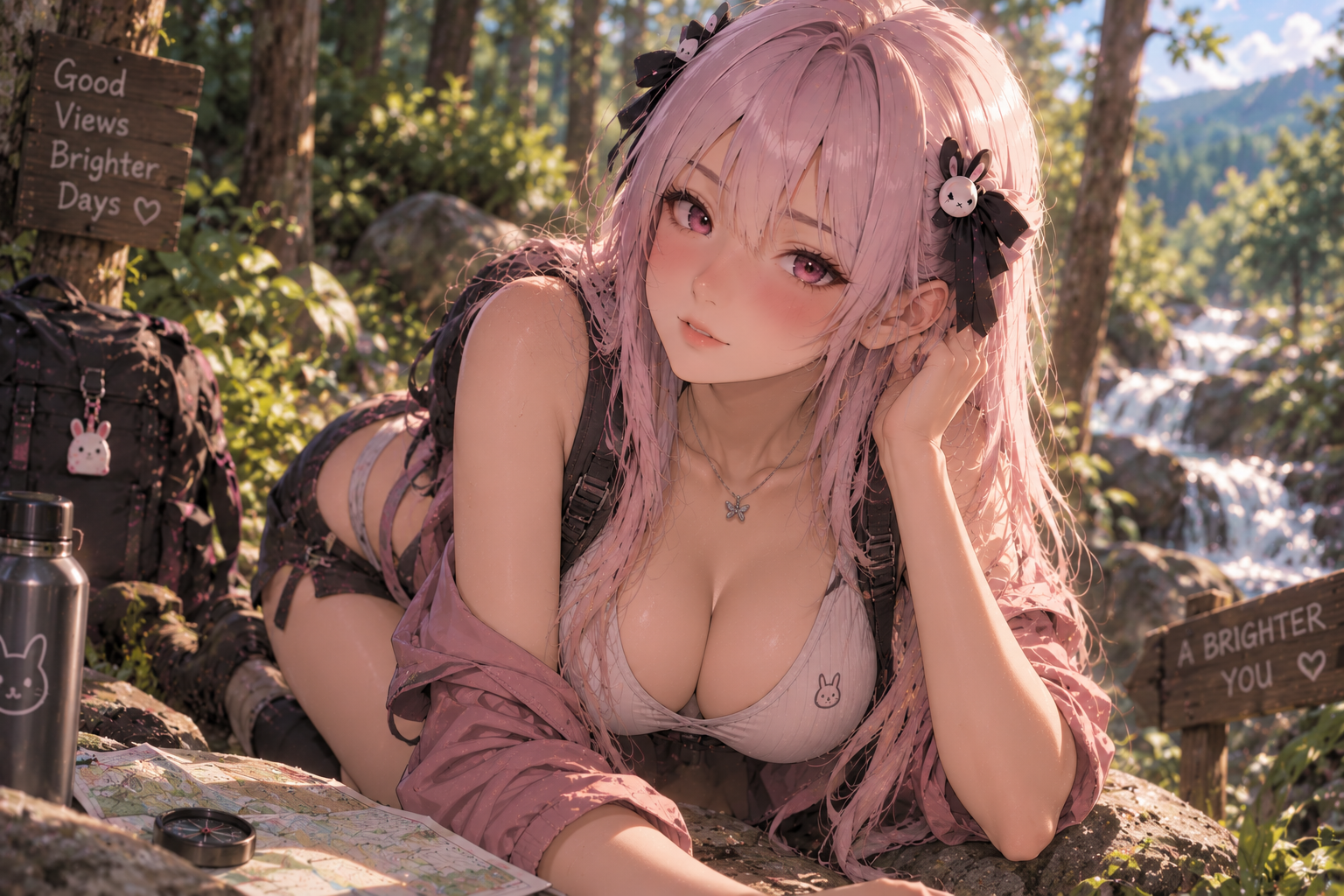
A few things the anime side happens to do better for a reader with no prior exposure.
The uncanny valley is smaller here. A photorealistic AI face has to clear a very high bar to feel right, and any small failure shows. An illustrated face is not asking to look real, so your eye is not checking for photorealism, and the whole experience gets easier from the first image on.
Expression range is wider. An illustrated character can look genuinely delighted or genuinely stunned in a way a photo of a real person cannot without tipping into the cartoonish. If you want to be able to read how she is feeling from a picture, illustration lets that come through.
Scenes have stronger atmosphere. Anime as a format is built for mood: a rain-lit cafe, a rooftop at night, a walk through a market at dusk. Those scenes tend to arrive with more feeling in the frame than the realistic equivalent, because the medium is designed for exactly that.
None of these requires you to know anything about the format to benefit from it.
Some of the character conventions on the roster lean into anime types that a first-time reader will find slightly stylised at the edges: certain visual codes, certain kinds of expressed emotion, certain occupations that read very naturally inside the format and slightly heightened outside it. That does not make them wrong. It means the register is a little more expressive than a realistic character sitting across a table would be. Some readers find that endearing quickly. Others need a session or two to settle into it.
There is also a specific reader for whom illustrated companionship will never quite click, because the whole appeal of the product for them is grounded realism. That is fair, and if that is you, the realistic side of the same product exists for a reason. myVirtual.love ships both categories side by side, so you can look at each and pick the one that matches how you actually imagine a scene.
The roster also includes some fantasy characters (guild lieutenants, sword saints, foxgirls and so on), who will make sense to a reader coming in with anime context and feel a little unfamiliar to one without it. Those characters are a choice of their own, and skipping them does not close off the anime side. There are plenty of contemporary characters on the roster who live in a city, work a normal-ish job and do not require any background to enjoy.
Knowing this in advance is cheaper than finding it out through three false starts.
You do not need to watch anything first. A lot of newcomers assume they do.
Two moves work well for a first session.
Pick a contemporary character from the roster instead of a fantasy one: a city clerk, a postdoc, a cosplayer, a virtual idol, a model. A character whose life sits in a recognisable modern setting is the shortest path from the visual style to a conversation that feels like a conversation. You get the aesthetic without the learning curve.
Set the scene somewhere ordinary. A cafe. Her apartment. A walk in the evening. A late night at her desk. Anime handles those scenes well, and they do not require you to be inside the format to write your side of them. Save the more stylised settings for later, when you have a feel for how she reads.
If neither of those lands after a session or two, the honest read is that either the archetype you picked is not for you or the anime side of the product is not. Both are useful information. Neither costs much to find out.

You know it has landed when you stop noticing the style.
Early on, the illustration is what your eye is on. You are looking at the images as pictures. A few sessions in, the images stop being the thing you are checking and become pictures of the person you are talking to. The style does not go away. It stops being visible.
For a reader who assumed anime companions were only for existing anime fans, that shift is often the surprise. The format was doing work you did not know it was doing, and by the time you notice, you are on the other side of it.
If you have been curious about the anime side of myVirtual.love and have been holding off because you thought it was not for you, the honest read is that most of the reasons for holding off dissolve once you are in a session. Try one contemporary character in one ordinary scene and see whether the images land for you. That is the whole experiment.
25 de septiembre de 2026 · 8 min de lectura
Five calls a day and no real conversation. Who remote-work loneliness hits, the two gaps in a home-office day and what an AI companion can and can't fill.
Leer más25 de septiembre de 2026 · 6 min de lectura
Gachikoi, an AI VTuber with a Twitch record and Cambridge's word of the year: what a VTuber gives you, what a companion adds and which crush you have.
Leer más24 de septiembre de 2026 · 8 min de lectura
AI now fakes the photos, messages and voices in romance scams. Seven signs that work whoever is typing, the FBI's 2025 figures and what to do next.
Leer más