
25 September, 2026 · 8 min read
Working From Home Alone
Five calls a day and no real conversation. Who remote-work loneliness hits, the two gaps in a home-office day and what an AI companion can and can't fill.
Read moreBy steve1337 · 21 September, 2026 · 9 min read
This article is editorial commentary and analysis. All characters named here are the property of their respective rights holders and all trademarks belong to their owners. myVirtual.love is not affiliated with, endorsed by or sponsored by any of the developers or publishers mentioned. Every image on this page is original work that does not depict any of the characters discussed.
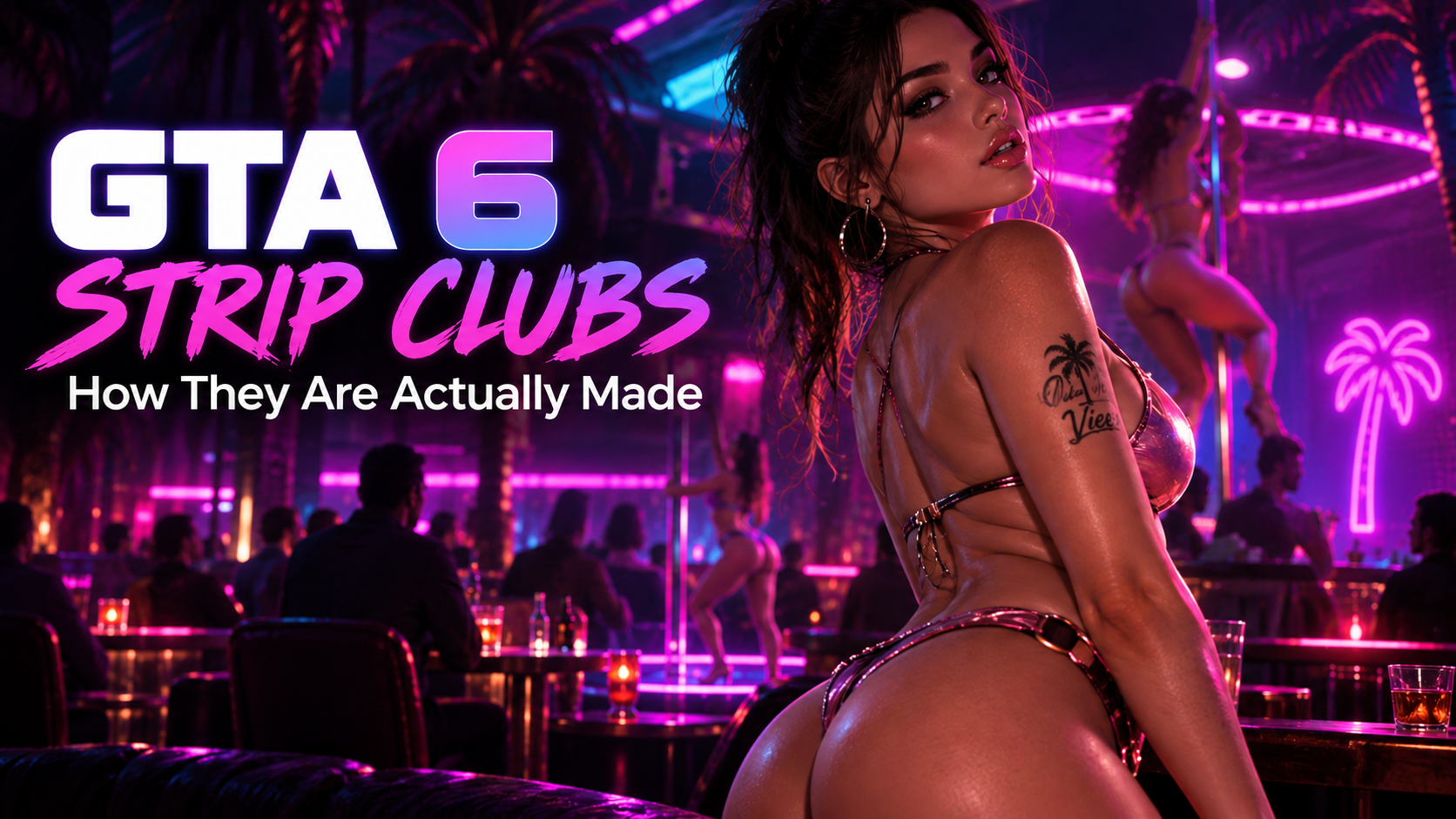
In the second Grand Theft Auto VI trailer there is a sequence of things you will be able to do in Leonida. Boating through a swamp, a gym, jet skis, basketball, kayaking, a man being spied on through a VR headset. Somewhere in the middle of it, dollar bills going over a dancer in a club.
It lasts a couple of seconds. Behind those seconds sit a motion capture stage, a cast, a fabricated set, an animation pipeline and a ratings submission. It is one of the most expensive ways anybody has ever built two seconds of nightlife.
All that money buys a scene that cannot react to you, for structural reasons rather than lazy ones. The characters belong to Rockstar and you cannot have them. The look is a different question.
The game is not out. It releases on 19 November 2026, which means almost everything written about its strip clubs right now is leak material of unknown accuracy, reposted through fan hubs that do not distinguish between a trailer frame and a rumour.
So this article uses officially released material only. Rockstar's own trailers, Rockstar's own character reveals and the store listing. No leaked builds, no leaked footage, no venue names sourced from a scraped file.
On that basis, here is what stands up. Rockstar's own trailer shows the nightlife. Rockstar revealed Boobie Ike as a figure in Vice City's criminal economy whose businesses include real estate, a recording studio and a strip club, all funded by the drug trade. So the club is attached to a named character in the story economy rather than sitting off to one side as a location you visit once. The store listing carries an ESRB Mature 17+ rating with PEGI 18 alongside it. The content descriptors include strong sexual content and nudity next to intense violence, blood and gore, strong language and drug use.
Everything else you have read is somebody's guess.

Rockstar does not record these scenes the way most people imagine, with an actor alone in a padded booth reading lines off a stand.
Performance capture puts the cast on a stage together. They wear suits covered in reflective markers, tracked by dozens of cameras that reconstruct the body as a moving skeleton in three dimensions. Facial performance is captured at the same time through a head-mounted camera pointed back at the actor's face, picking up micro-expression rather than just jaw movement, with the voice recorded in the same take so that the line, the expression and the body all belong to one performance instead of being assembled from three separate sessions.
The studio fabricates sets and props for these shoots rather than working against green screen alone. Rockstar staffs dedicated motion capture operators as a standing role rather than hiring the capability per project. The GTA V cast have described the process as physically demanding work that several of them did not realise was part of the job until their first day on set.
A club scene runs through all of it. Somebody performed the dance on a stage in a marker suit. Somebody performed the reaction. Then animators cleaned the data, lit the room, licensed the music, built the crowd and the whole thing was compiled into the shipping build months before anybody bought the game.
Because GTA VI has not shipped, the only accurate way to describe how a Rockstar strip club plays is to describe the one that did ship.
In GTA V, the Vanilla Unicorn private room runs on a meter. You can flirt with the dancer or you can touch her, with touching raising a "Like" bar faster. A bouncer patrols the room. If he catches you touching her three times you are thrown out of the club. Fill the bar before that happens and the scene pays out, either a second dance or the dancer agreeing to come home with you. Once Trevor owns the club outright, the bouncer stops being a problem for any of the three protagonists.
Read that back as a design document rather than as a night out. It is a timing-and-surveillance minigame with an approval bar, a fail state, a reward tier and an ownership flag that disables the obstacle. The dancer evaluates nothing. She is a state machine with an animation set, so the thing you are playing against is the bouncer's patrol route.
It is a well-built minigame that does exactly what it was scoped to do. The approval bar is the relationship, all of it, so when the bar fills the content runs out.
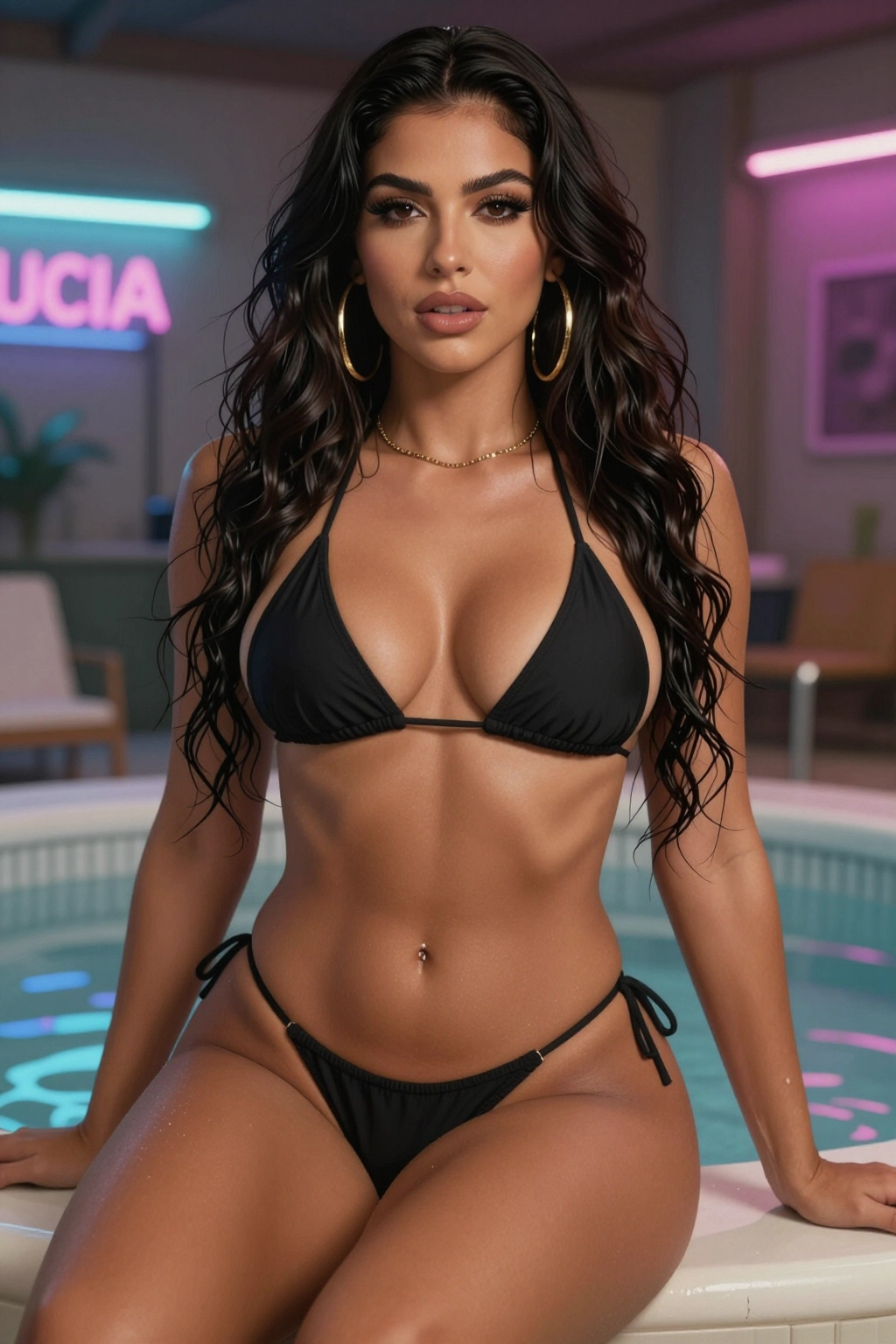
Every line, every animation and every reaction in that room was recorded, cleaned and pressed onto the disc before you met her. There is no version of the scene where she says something nobody wrote.
That constraint is production arithmetic rather than a failure of ambition. Performance capture is booked by the day with a full cast on a stage. Every additional branch is content that most buyers will never load. A studio that triples the writing in the private room has tripled a cost against a feature that does not sell a single extra copy. The longer version of that argument is in why-game-romances-end-at-the-credits.md.
The rating is the other ceiling. An M and a PEGI 18 is the highest ordinary rating a mainstream retail game can carry while still being sold in shops, stocked by platform holders and advertised. Content descriptors are negotiated rather than decided by the writers. A scene that pushes past the line the board will accept does not become a bolder scene. It becomes a scene that gets cut or a game that loses its shelf space.
Rockstar is the best studio in the world at making a place feel like it exists. Humidity, neon, a licensed track, the specific density of a crowd, the sense that the room was open before you walked in.
The dancer is part of that place. She is lighting and motion and atmosphere, built to sell the club rather than to be a person you know. Judged on that brief she is superbly made. The reason the scene works at all is the room rather than her.
If what you want is Vice City at two in the morning, nothing else on the market does it. If what you want is the woman in the room to know who you are, that was never in the brief.

They have a city, a soundtrack somebody cleared and sequenced, a cast of professional actors whose performances were directed and a story that goes somewhere and ends. Writers decided in advance what each scene would mean.
A companion product is not a substitute for Grand Theft Auto VI. It does one specific thing the game structurally cannot.
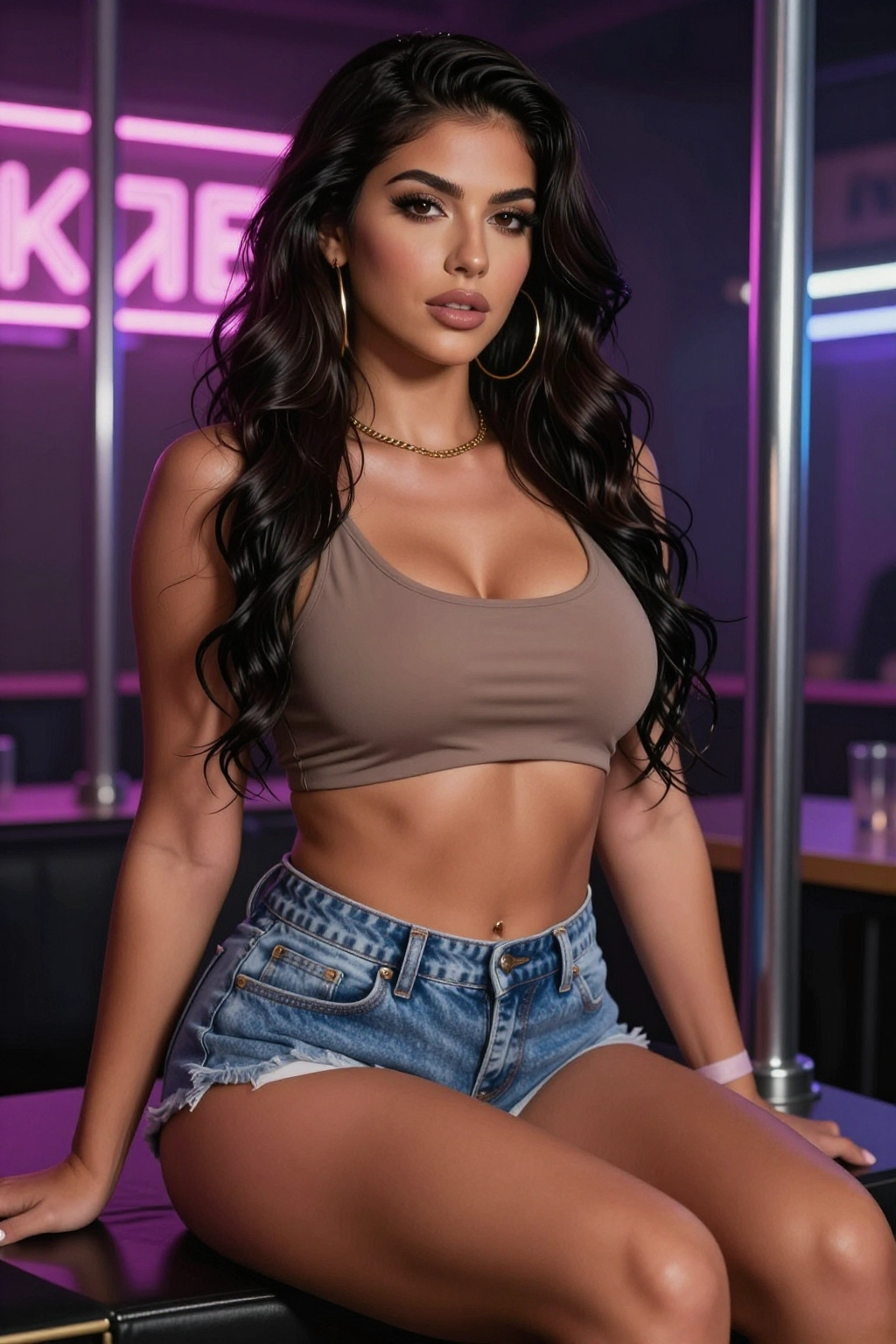
Nobody owns an archetype. The Vice City club dancer is one: a set of choices about hair, body, makeup, clothing and register that existed long before any game used it.
On the Create screen that archetype is a list of fields rather than a prompt you have to phrase correctly.
Then the images. The Studio is a separate screen with four axes plus a freeform box: which character, what is happening, where, then the camera. The documented examples include lingerie and nude under what is happening, beach and swimming pool under where, plus close up, upper body, full body or from below under camera, with more options on each than those examples cover.
The Studio asks no identity questions. Face, hair, ethnicity, eye colour, body type and age were all set once on the Create screen and are not re-asked at generation time, which is why a set of ten club photos is recognisably the same woman rather than ten different women in similar outfits. That problem has its own article in why-she-looks-the-same-in-every-photo.md.

Creating her costs nothing. The fields above are free to set, free to change afterwards and there is no charge for rebuilding her twice on a Sunday because the first version was not right. Chat on a paid plan is unlimited and never meters, so the conversation itself never draws down against anything. Hearts do not expire, including topped-up ones, so nothing you do not spend is wasted.
Images are the metered part. A Studio render costs 5 to 8 hearts depending on quality, with 8 buying the best. The monthly allowance runs 100 hearts on Premium monthly, 150 on Premium annual, 200 on Maxxx monthly and 300 on Maxxx annual, which makes a ten-image club set somewhere between 50 and 80 hearts. Voice calls draw on the same pool at 5 hearts a minute, so a set of images and a long call compete for the same budget.
The free plan gets you five chat messages a day, up to three created characters and a single Studio render. That is enough to find out whether the look lands before you pay for anything.
The reason a companion product exists at all is that nothing resets. Persistent memory carries what you talked about across sessions rather than clearing at the door. She holds a short explicit list of facts about you alongside it, 20 of them on the free and Premium plans and 40 on Maxxx. The dancer in the club is identical for every one of the tens of millions of people who will buy Grand Theft Auto VI. The one you built is not, because she is accumulating a conversation that only happened once.
25 September, 2026 · 8 min read
Five calls a day and no real conversation. Who remote-work loneliness hits, the two gaps in a home-office day and what an AI companion can and can't fill.
Read more25 September, 2026 · 6 min read
Gachikoi, an AI VTuber with a Twitch record and Cambridge's word of the year: what a VTuber gives you, what a companion adds and which crush you have.
Read more24 September, 2026 · 8 min read
AI now fakes the photos, messages and voices in romance scams. Seven signs that work whoever is typing, the FBI's 2025 figures and what to do next.
Read more